Winterizing Air Compressor
#0 Winterization with Air Compressor
#1 !! Empty Black Tank!!
#2 -Empty Fresh Water Tank
- Level the trailer from side to side and front to rear.
- Open all faucets.
- Open Fresh Water drain and low point drains.
- Turn the water pump switch to the ON position to expel water from the fresh tank.
- Open all drain valves inside and outside.
- Located inside valves under dinette seating.
- Set all valves to Open position including drain plug or valve on water heater.
- Open outside valves
- Fresh water, Low Point Valves
- Open and flush the toilet-flushing valve.
- Operate the shower head while holding it down inside the tub and drain all water from the flexible hose
#3 Turn the pump switch OFF
Turn the pump switch OFF after all water has been removed from the storage tank.
- Disconnect outlet hose from water pump. Turn the pump on until all the water is expelled. This water, about 1/2 cup, can be caught in a towel or rag.
- Reconnect the water pump outlet.
- Lower the front of the trailer as far as the jack will allow and let the trailer sit until water ceases to drain (no droplets are forming), then
- Raise the front of the trailer the jack up as high as it will go until water ceases to drain.
#4 Before applying air pressure
- Set the water line valves as described below for “Blowing Out Water Lines.”
- Once the valves are set, use the adapter mentioned at the beginning and apply, at max, 40 – 50 lbs. of air pressure to the city water inlet until only air is coming out of the faucets.
- You may need to open and close faucets one at a time and repeat this step several times to force out trapped water.
- Pour a cup of approved non-toxic RV antifreeze into the lavatory, sink, and tub drains to prevent trap freeze-up
#5 - Open the Black tank valves
** Be sure to open the waste-holding tank dump valves, and drain and flush the tanks thoroughly (this is very important as the sewage in the tanks, if frozen, could seriously damage the tanks). Plan ahead and have this done at a dump station.
Do this at campground
#6 - For best practices: batteries
For best practices: remove the batteries from your trailer and store in a cool, dry place where there is no danger of freezing. It is very important for optimum life of a battery to check it periodically and to keep it fully charged. This is especially true in winter months, when the temperature may drop below freezing. If the period of storage is for 30 days or less, you may turn off the battery disconnect switch rather than remove the batteries. Continue to check and recharge the batteries as needed, at least weekly in severe weather.
2025 28' Manual
Winterizing RV Antifreze
Optional
An additional step to winterization is to consider adding a non-toxic RV antifreeze to the water lines using the pre-installed Winterization Kit. It may take 2-3 gallons to fill the entire system so prepare accordingly.
The Winterization Kit is near the water pump, see Water Pump Access Locations on page 8-11. For drain valve locations, see Drain Valve Locations on page 8-12.
#0 Winterization Procedure with RV antifreeze**
#1 Reconnect All Lines
1. Reconnect all lines and showerheads that were disconnected in the previous steps.
2. Close all the drain valves.
3. Open the sink and shower drains if they are closed.
4. Open all the faucets, including the showerhead faucet handle and, if equipped, the external showerhead.
#2 - Go to the winterization kit
Go to the winterization kit and turn the valve handle to the winterizing position as indicated on the tag attached to the kit (shown above).
6. Uncoil the hose attached to the kit, remove the hose cap, and insert the hose down to the bottom of the RV antifreeze container.
#3 Turn the pump switch on and run it until antifreeze
7. Turn the pump switch on and run it until antifreeze starts coming out of the faucets. Once antifreeze runs from one tap, turn it off and continue to the next one. Move from one fixture to the next, shutting them off as you go until all the lines are full. As you empty each antifreeze container, turn the pump off, transition to a full container, and turn the pump back on to continue
#4 Allow the antifreeze to flow down drains
8. Allow the antifreeze to flow down drains. Flush the toilet and allow antifreeze to flow down the toilet. If equipped, operate the toilet hand sprayer until antifreeze is coming out. Work the hand shower sprayer while holding it down in the tub until antifreeze is coming out, and if equipped, do the same with the external showerhead. Any remaining antifreeze can be dumped down a drain.
#5 - Shut the pump off
9. Shut the pump off once all the lines are full.
10. Open all the faucets and leave them open.
11. Turn the winterization kit valve back to the normal use position, place the cap back on the hose, and coil it back up for storage.
#6 - NOTICE Remove all RV antifreeze spillage
NOTICE
Remove all RV antifreeze spillage from all drain and faucet parts after winterizing. Failure to do so
could damage the plumbing fixture’s finish. Do not use water to rinse antifreeze down the drain as it will dilute the antifreeze.
4. (**Winterizing Valve Image**)
#7 - Restoring Service After Winter
Restoring Service After Winter
1. Re-install the fully charged batteries.
2. Close the dump valve, all water faucets, and fresh water tank drain.
3. Add water to the fresh water tank.
4. Turn on the water pump.
5. Open and close the faucets one at a time until the water runs clear at all faucets signaling RV non-toxic antifreeze is flushed out of lines. Go back and recheck water clarity at all faucets.
6. Turn off the water pump.
7. Hook up to a city water supply, open the faucets again, and recheck water clarity.
Heating and Hot Water System
Please refer to the Alde manual in your owner’s packet to ensure all required maintenance is performed. The following information is provided to aid in some of the required periodic maintenance and to locate access areas needed to perform required maintenance.
Checking Glycol Levels
Prior to using the system and periodically thereafter, check the heating system expansion tank fluid level. The tank has markings on the side to indicate the maximum and minimum fluid levels. In a cold tank, the fluid level should be about .4 inches above the minimum line.
The glycol mixture should be replaced every two years. If the glycol fluid is not replaced at appropriate intervals, there is a risk of frost damage, corrosion, bacterial growth and/or overheating. This should be performed by your Airstream dealer.
Expansion Tank Locations:
28RB Classic: inside the top cabinet behind the aft dinette seat.
30RB Classic: behind a removable panel inside the bathroom cabinet, above the toilet.
33FB Classic: inside the top cabinet behind between the shower and sofa wall
NOTICE
Only high-quality ready-mixed propylene glycol (with inhibitor) is intended for use in aluminum
heating systems. The glycol must carry the label GRAS (generally recognized as safe). Alde
recommends using only the ALDE brand glycol formulated explicitly for the Alde heating system.
NOTICE
The freshwater in the boiler should be drained during extended breaks and when there is a risk
of frost; otherwise, the boiler may freeze, causing damage. The warranty does not cover frost
damage.
Maintaining the Water Tank Air Cushion
The Alde boiler has an air cushion (air space) at the top of the hot water tank that must be maintained. The air cushion allows the water to expand when heated and absorbs any pressure shocks caused by the water pump in the heating system.
Restore the system’s air cushion after 14 days of use. To restore the air cushion, turn off the fresh water pump and open the heating system safety/drain valve for a few seconds. To open the valve, lift the lever upward until it rests in the vertical (open) position, as shown above.
Valve Access: The valve for the 28RB Classic is under the aft dinette seat, and the valve for the 30RB and 33FB is under the forward dinette seat. To access the valve, pull outward on the upholstered panel facing the isle to release it from the spring-loaded catches holding it in place.
2025 28' Manual
Winterizing
Helpful Articles
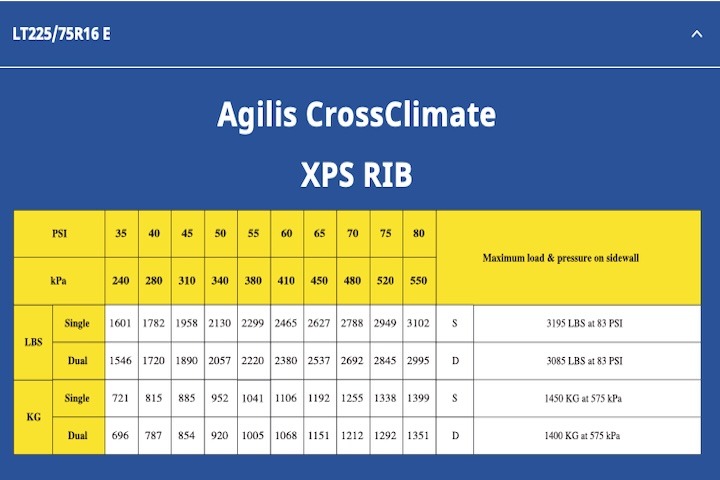
Michelin Tire Chart
https://business.michelinman.com/people-transportation/rv/load-and-inflation-tables
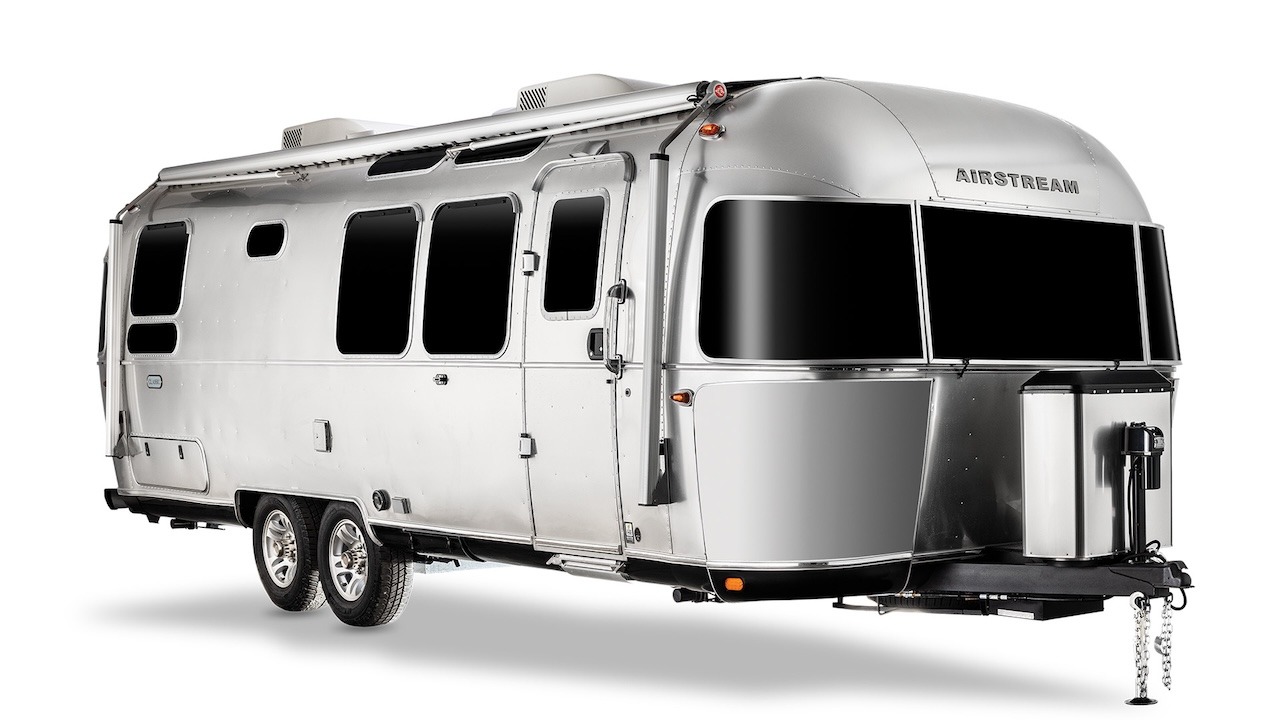
Airstream Classis Support
https://support.airstream.com/hc/en-us/sections/360012333472-Classic